Delivering transformation programs are never easy. Below are my key learnings gained from managing projects of various sizes, complexity & products in ERP Finance, Retail, HR, Supply chain and tech space. This is a long post so those in a hurry, breathe!! 🙂
- Business readiness: This to me is a crucial component for a successful transformation. Often addressed late in the project, you will see significant benefit in prioritising and investing appropriately. Readiness is not limited to change management, rather expands into areas like developing business processes before commencing design, staffing, budgeting, training and various other aspects. Ensuring key roles such as product owners & enterprise architects are free from BAU responsibilities for key phases of the project lifecycle yields the result you are aiming to achieve.
- Multi-partner engagements: Multiple implementation partners or vendors are inevitable in medium to large scale complex programs. As much as you’d like to reduce the number, solution complexity and political climate demands for it. Managing multiple partners is not an easy task and the responsibility should not be dumped on the program team. Instead, a dedicated vendor management team that works across programs is worthy of an investment. A vendor engagement plan that covers governance framework, escalation of RAIDs, and change control process, ways of working, key performance artefacts developed and maintained, reports to track and monitor delivery performance of partners could come handy.
- Contracting: Contract type should align with the expectations of the customer & partner organisations. There is significant value in having vendors within the same program align their contract types (T&M or FP). This avoids conflicting objectives and reduces management overhead.
- Program & solution governance: A transparent and a combined governance (in multi-partner engagements) that fosters effective decision making is a key enabler for success. Start with monthly steering committees with all vendors involved in delivery that includes POs, and architects. Vendor specific steering committees be used to manage commercial sensitivity. I’d also recommend an architecture forum for solution governance. This ensures alignment with business objectives and find dependencies across programs.
- Business, IT and project disconnect: I am sure we have heard this a million times that requirements have changed after speaking to real business users!! Despite the confidentiality of how businesses operate, customer organisations should make business users part of the core implementation team. The benefits outweigh the old concept of assigning POs to represent businesses.
- Deliver value streams: Project based implementations work well for well understood requirements, solution and short timeframes (e.g. 1year). As the solution complexity grows (e.g. >1 year timeframe) a more flexible implementation approach is required. As customers learn more about the product & industry they operate in, business processes and solution evolve over a period of time. Think of DevOps and organise implementations around delivering value in increments which keeps investors and sponsors happy. This must include feedback loop from the business to make necessary adjustments.
- Organise implementations to deliver MVP in increments
- Move from deliverables to business outcomes
- Focus on incremental value delivery
- Shift from project lifecycle to product lifecycle management
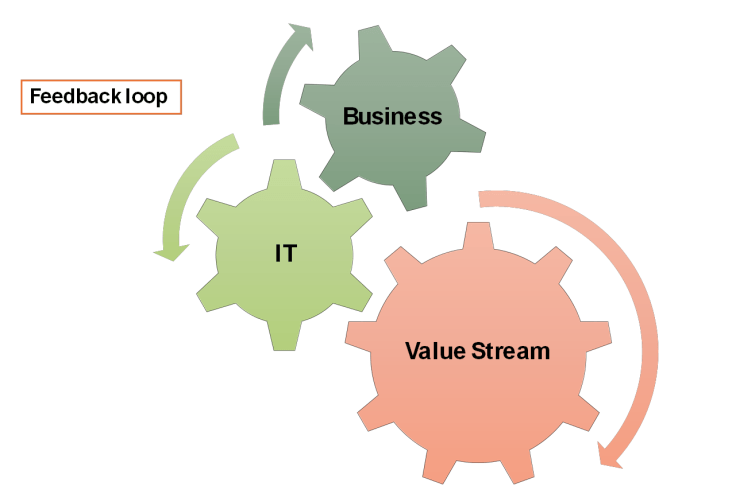
Businesses have an equal responsibility to support incremental delivery and not demand to have all features at the same time. Adopting industry best practices or OOTB functionality as an MVP is recommended.
7. Data modeling and integrations: In projects where the target solution is driven by data, it is crucial to build a robust and flexible data architecture. This process should begin early in the implementation. Manage your expectations with data quality to be high as they could change as business processes are refined through testing. This links back to my earlier point on delivering increments early which enables us to provide data just as much as required for the MVP planned for that value stream.
Integrations are a broad topic and needless to say the more systems you connect to greater is the solution complexity. I would suggest integrations and data architecture to be managed by a separate stream within the implementation group such that there is dedicated focus on delivering quick value instead of a big bang approach. This also helps manage program budgets effectively.
8. Embrace project challenges: It is the nature of any project to have risks, issues or challenges. So, it is more beneficial to accept them wholeheartedly and focusing on the resolution. Customer organisations are looking for vendors to provide ‘solutions’ not just highlight problems. Brainstorming outside of the formal structures enables the wider team to share ideas and come up with innovative solutions to problems.
9. Early product exposure: In most ERP implementations, business users prefer to have access to the application early to gain confidence. This should be seen as a good practice, to allow users (especially those who will be involved in testing) explore the new system. Simulate your target state solution in a separate instance and keep this updated once a month as you progress with the build. This could reduce significant testing effort during SIT or UAT.
10. Team dynamics: For those managing large programs, it is crucial to acknowledge that team members come from diverse backgrounds, possess various skill sets and have different level of experience. It is unrealistic and practically impossible to keep everyone pleased and happy. Being self-aware of this reality is vital and finding that common space where most team members are comfortable collaborating is worth a gold.
11. Celebrate often: Creating a positive work culture is top priority and the responsibility lies with everyone assigned to the project including sponsors and leaders. Celebrate every small win, and don’t wait for the big go live. Remember it is a journey not the end. No environment is perfect and is bound to have problems, so focus more on the solution than discussing issues, avoid gossips, smile and have a laugh.
If you got this far, I trust this has been of value to you.
I look forward to your comments and discussions.
 Adventure
Leave a comment